Nouvelle publication de la professeure Audrey Rousseau
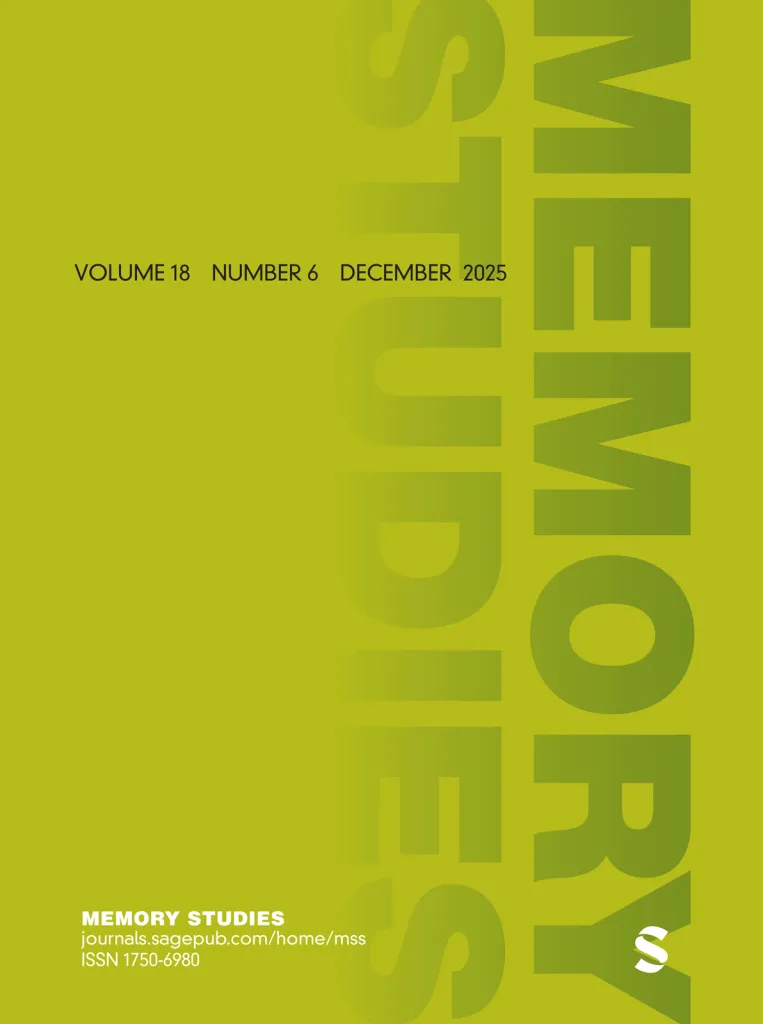
La professeure Audrey Rousseau, du Département des sciences sociales, vient de publier l'article "Clarifying dissenting voices : Exploring the ambivalence around the Canadian national inquiry into missing and murdered Indigenous women and girls" dans le numéro thématique de la revue internationale Memory Studies intitulé "Memory at the Intersection of Mass Violence and Socioeconomic Inequality".
Cet article contribue aux analyses relatives à la justice transitionnelle et la justice réparatrice dans les démocraties libérales, et ce, en étudiant les conditions de possibilités et les ambivalences rencontrées au Canada par l'Enquête nationale sur les femmes et les filles autochtones disparues et assassinées. La thèse défendue est qu'en optant pour un processus d'expression de la vérité (truth-telling process), plutôt qu'un processus fondé sur la recherche de la vérité (truth-gathering process), l'Enquête nationale a limité les occasions de nommer et d'agir sur les violences systémiques (raciales, coloniales et de genre), dont les inégalités de redistribution économiques et les questions d'imputabilité relativement aux institutions judiciaires et policières. Comme nous en faisons la démonstration, ces limites ont eu des conséquences sur la participation des survivantes et des proches d'un être cher disparu ou assassiné à ce processus inédit.
Résumé en anglais
From the outset, the Canadian National Inquiry into Missing and Murdered Indigenous Women and Girls (NIMMIWG, 2016–2019), whose mandate was to investigate and report on the systemic causes of all forms of violence against Indigenous women and girls, has faced complaints from survivors, families of the missing and murdered, and Indigenous associations across the country. By exploring the crisis of legitimacy experienced during the NIMMIWG’s process, this article traces the interplay between the inquiry’s legal scope, public grievances and possible testimonial outcomes. The objective is to consider how conflicting views and ambivalence in understanding the inquiry’s vision and role have impacted this truth-gathering process focused on survivors and families’ testimonies of colonial and gendered violence. The first section recalls general doubts and suspicions expressed in Canadian media (2015–2018) towards the inquiry’s goals and actions, notably with respect to questions of liability. The second section analyses a few public testimonies about ‘stolen sisters’ given during the Montreal public hearing, which reveal an irreducible tension between finding new forms of accountability, notably by police forces and the judicial system, and the cultural and healing remembrance platform of the NIMMIWG. The last section reflects on how this state-sponsored apparatus, based on a language of truth-telling and remembrance, avoided an opportunity to address systemic structures of violence towards Indigenous women, girls, queer, trans, and two-spirit people with regard to inequalities and redistribution faced by families and survivors of loved ones, not only in their everyday lives and their experience of destruction and death, but also, I argue, in sustaining their participation in this state-sponsored process and its aftermath.
Référence complète
Rousseau, A. (2025). Clarifying dissenting voices : Exploring the ambivalence around the Canadian national inquiry into missing and murdered Indigenous women and girls. Memory Studies, 18(6), 1594‑1616. https://doi.org/10.1177/17506980251368771